Oxleas Woods Parklands
Here comes part two in a series of maps, once again inspiration came from the “draft” woodland management plan submitted to Greenwich Council.
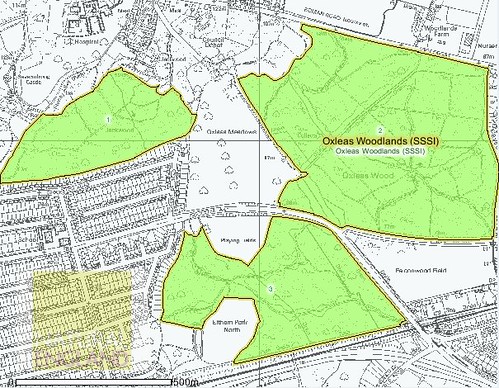
This time it’s the designation of Scientific Interest that has been mapped out, which is taken from an ordnance survey version including real boundaries, footpaths, and drains (not sure if that means woodland ditches or victorian plumbing): at natureonthemap.org.uk. Some of Jackwood and Oxleas Wood, and the whole of the Sheperdleas Wood were granted protection from 1984 – almost ten years before the government wanted to replace the woodlands with a traffic bypass – which goes to show how safe an SSSI actually is: not very (Twyford Down is also an SSSI and look what happened there) – anyway, Oxleas is probably safe, so here’s a bit of the Scientific Interest:
The whole of the notification document is decorated with an impressive sounding collection of flora and fauna names and is copied out below, with the addition of painstakingly embedded media – mainly from wikipedia for flora and uk wildlife sites for fauna – plus some bird protection links where birdsong and videos can be observed. A more recent check up stresses the importance of lying dead wood for invertebrates to use (presumably the dogs enjoy this aspect of woodland preservation too):
Oxleas, Jack and Shepherdleas Woods are one of the most extensive areas of long established woodland on the London Clay in Greater London. The woodland has a rich mixture of tree and shrub species within which several woodland types can be recognised. The woods contain a number of species with a restricted distribution in Greater London.
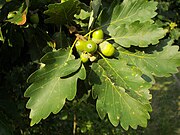
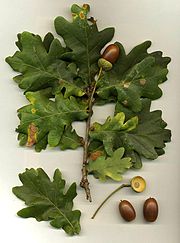
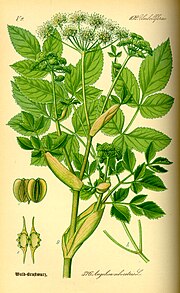
Most of the woodland lies on a south-east facing slope of the London Clay. In parts the former coppice system of management is evident, and this traditional management has been reinstated recently. The majority of the woodland comprises stands of hazel-sessile oak, hazel-pedunculate oak, and birch-pedunculate oak woodland. These stands tend to lie on the more acid base-poor soils and carry a ground flora of predominantly bramble and bracken, with wood sage Teucrium scorodonia. Pedunculate oak-hazel-ash and pedunculate oak-hornbeam woodland over bramble occurs mainly on the heavier richer soils, often on the lower slopes. In places the drainage is impeded and there is a small stand of alder. Plants characteristic of these wetter conditions include wild angelica Angelica sylvestris, broad buckler fern Dryopteris dilatata and pendulous sedge Carex pendula.
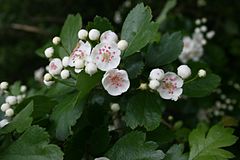
In parts there is a well developed woodland structure with a variety of trees and in particular, shrubs. Some of these shrubs have a restricted distribution in the London area such as guelder rose Viburnum opulus, midland thorn Crataegus laevigata and buckthorn Rhamnus cartharticus; several of the species are more usually associated with outcrops of chalk. These include wayfaring tree Viburnum lantana and dogwood Cornus sanguinea. The woods are also noteworthy for the large mature wild cherry Prunus avium, and the wild service tree Sorbus torminalis. The latter occurs in unusual abundance: no other London woodland is known to contain such a large population and size range of wild service tree.
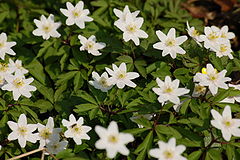
In general the herb layer is typical of woodland on the London Clay; however there is a substantial number of plants which are associated with long established woodland. The spring flora includes bluebell Hyacinthoides non-scripta in abundance with wood anemone Anemone nemorosa and wood sorrel Oxalis acetosella. Along streams and ditches remote sedge Carex remota, wood sedge Carex sylvatica, yellow pimpernel Lysimachia nemorum, a number of ferns and the uncommon Forster’s woodrush Luzula forsteri are found. The lower damper slopes, particularly where there is an undisturbed litter layer, support a rich variety of fungi. Several locally uncommon species are present and more notable species such as Otidea alutacea, Russula pseudointegra, Ciboria batschiana and Podoscypha multizonata.
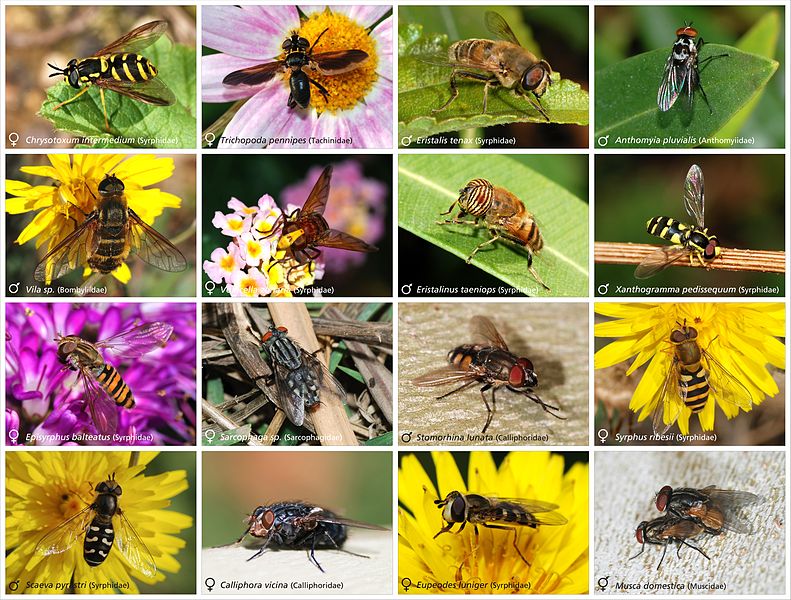
Past records indicate the prescence of a diverse and interesting insect fauna – particularly beetles (Coleoptera), bugs (Hemiptera), and flies (Diptera). More recent sampling records several notable species such as the beetles Oligota flavicornis, Oak Bark Beetle and the fly Dolichopus wahlbergi. In addition the Lepidoptera fauna includes a number of interesting species such as the festoon Apoda avellana, oak lutestring Cymatophorima diluta and the seraphim Lobophora halterata amongst the largest moths. The breeding bird community contains a range of woodland birds and has several species which are typically associated with the mature timber habitat: tree creeper, nuthatch, woodpecker, chiffchaff and wood warbler. Wood warbler is a notably scarce and declining breeding species in Greater London.






.jpg/180px-Hyacinthoides_non-scripta_(Common_Bluebell).jpg)